
Right now the Sipping Point handles two broad classes of events pretty well.
Drop-in events. The host is 100% going; they’re just advertising it. That’s a common, low-friction pattern: “I’ll be here, come if you want.”
The classic Sipping Point event. You pick a specific time and place, then people can RSVP. That works when everyone is happy to commit to a fixed plan.
But people don’t always plan like that. Sometimes they just want to hang out and they don’t care exactly when or exactly where. They need to find a time that suits most of the group, then find the right restaurant, pub, activity, or someone’s home. I’d like to support those kinds of events: get the conversation going, gather feedback on what times work best, then help them find the right venue. Or, alternatively, start with a specific idea (“Let’s try this new restaurant”) and then help pin down the right time.
This makes me think that events might move through states: Idea, then Event chosen and/or Time chosen, then RSVP open, then Confirmed.
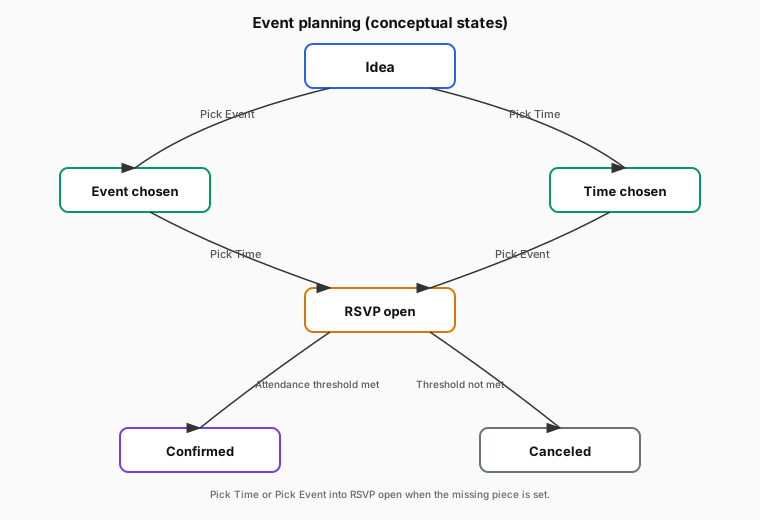
Rough sketch: RSVP open once both dimensions are set; Confirmed/Canceled come from the RSVP phase.
Looking at this chart, it’s easy to see how today’s event types sit on it.
Drop-in events basically start out in Confirmed: the host is going no matter what (threshold of 1), so you’re not descending through Idea → Event → Time → RSVP to get there.
Traditional Sipping Point events start out in RSVP open: time and place are already fixed, and the group is just working toward the attendance threshold (or not).
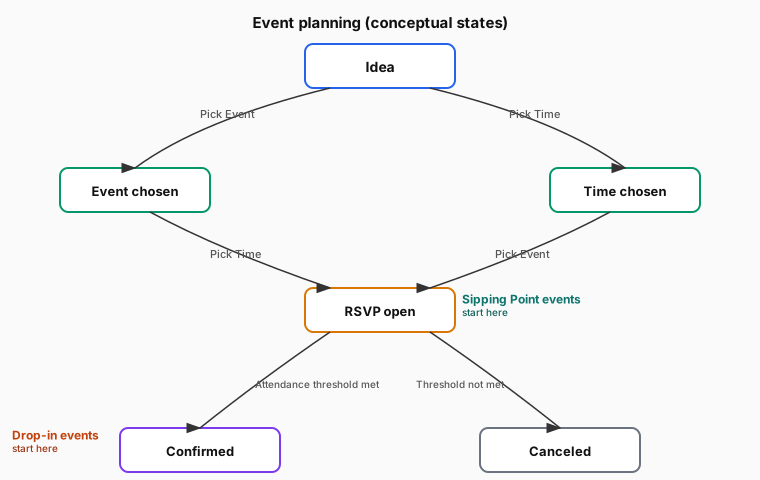
Colored labels show where each event type begins today; black arrows are the state transitions.
The work ahead is to provide support for events higher up on this chart: the earlier states (Idea, Event chosen, Time chosen), so we can ease the burden of planning for people who don’t already have a full plan when they open the app.